• 1 Post
  • 188 Comments
Joined 2 years ago
cake
Cake day: November 8th, 2024

help-circle

  • This could be a family guy gag, it fits that perfectly in tone and pace (though it’s not really relateable to a general audience.)

    Being Earnest About it,

    I would say that pure anarchism functions only as a philosophy of self-conduct. Honestly, I think more people understanding the communications of anarchism in that frame would do a lot of good, even if it’s not their final philosophical subscription. I treat it similar to Jesus’ teachings of tolerance, or Buddhism’s ideas of pacifism, however yielding more actionable conclusions, such as participating in anti-establishment action and mutual aid.

    Actual real-world solutions require democratic deliberation within a community, though. There are some more thought-out versions of that which exist, such as Anarcho-syndicalism (conducting supply chains and a pseudo-economy through union-conducted coops broadly), but specifically thrusting forth a specific solution is both a dictation to the anarchist community as a whole, and thus somewhat antithetical to what anarchism is about; and likely to fail, since many communities would likely not be able to replicate many aspects of the template.




  • JayDee@lemmy.worldtoMicroblog Memes@lemmy.world•Clowning around
    link
    fedilink
    English
    arrow-up
    13
    ·
    edit-2
    12 days ago

    From this site ( I only inspected briefly so it might be a conspiracy site idk1):

    The massive outer stones came from about 15 miles north, the smaller inner stones traveled roughly 150 miles from Wales, and the central Altar Stone journeyed at least 750 kilometers from northeast Scotland

    Quite impressive, though I think we’ve compiled a wide variety of ways that could have been done, and have been recreated, for moving massive stones like Stonehenge’s. it seems less of ‘how’ and more of ‘which method’ that’s the mystery at this point. Here’s an article that articulates that sentiment, and a video of experimental historians replicating my favorite version of this.

    Edit:

    • 1 after giving it a more thorough look I feel safe saying this source is respectable.

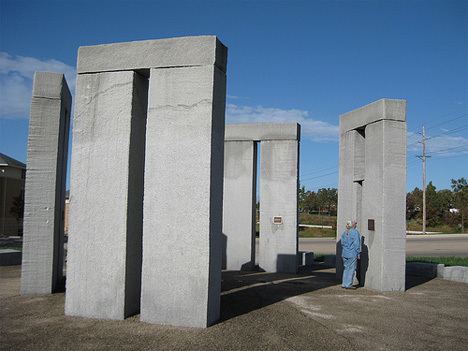
  • Not only could it be built today, it was rebuilt by a retired contruction worker named Wally Wallington in the 2000s. Here’s his official site documenting it that’s linked on his youtube channel.

    Turns out, probably just took beams and small stones used respectively as levers and fulcrums to do it. Various aspects of his setup is likely not period-perfect, but I think he demonstrates pretty clearly that this isn’t a forgotten ability, it’s just been made obsolete by more modern methods.

    Here’s Wally’s final creation as far as I can tell.


  • JayDee@lemmy.worldtoMicroblog Memes@lemmy.world•Anthem lyrics
    link
    fedilink
    English
    arrow-up
    19
    ·
    1 month ago

    It’s used quite often to mean chest. It’s a fill in for saying “breast”, which is usually meaning “inside one’s chest, near to their heart”.

    There’s a quote attributed to Albert Einstein though I found no source to which is “Anger dwells only in the bosom of fools”, which shows this application.

    Shakespear also has Isabella say in Measure for Measure, act 2 scene 2 “Go to your bosom: knock there, and ask your heart what it doth know.”, which seems most accurately to be describing the chest more vaguely.

    I think that these two show how ‘in [one’s] bosom’ often poetically means 'near [one’s] heart", or ‘close to [one’s] chest’. The chest isn’t the point of sentence, it’s more a reference point for describing the actual subject location.